If you are actively discerning a vocation to the Priesthood, Diaconate, Consecrated Life, or Marriage and you are looking for information to help in your discernment, BE SURE TO CHECK the section at the bottom of the right sidebar for the "labels" on all posts. By clicking on one of these labels it will take you to a page with all posts containing that subject. You will also find many links for suggested reading near the bottom of the right sidebar. Best wishes and be assured of my daily prayers for your discernment.

Thursday, March 26, 2009

"Youth get vocation advice at Portland rally"

From the Catholic Sentinel
By Ed Langlois

More than 350 sixth graders broke up laughing when Father Michael Biewend pulled out a cell phone and started dialing up youths in the crowd. When they answered, the priest said loudly that God is calling to ask them to follow Jesus.

Father Biewend’s keynote speech was part of last week’s vocations rally, which drew sixth graders from a dozen Catholic schools to St. Pius X community center.

The day examined the four vocation groups: priesthood or diaconate, religious life, marriage and single life.

Father Biewend, pastor of The Madeleine Parish in Portland, explained that until seventh grade, he really wanted to be a pilot, or a bus driver or a milk man. But then he met a holy nun who prayed the rosary during breaks in class and he wanted her joy, her peacefulness, her goodness. He later met an impressive young priest and the idea of life in the church endured. He tried to push it aside, but kept getting nudged. Once, he inadvertently knocked a book down at the home library — it was about a missionary priest.

When he finally started seminary, he was so homesick, he called his mother and asked her to bring him home. She returned, and he thanked her later for the tough love.

Vocations directors from around the Archdiocese of Portland have consolidated efforts to broaden their outreach to youths. Father Kelly Vandehey, vocations director for the Archdiocese of Portland, and directors from various women’s religious communities and members of the vocations promotion group Serra Club have decided to concentrate on two crucial phases in early life — the age of 11 and grade 11. That’s why the program is called Focus 11.

“Everyone has a vocation, a call to holiness,” says Sister Charlene Herinckx, director of vocations for the Sisters of St. Mary of Oregon.

“We’re not talking about a job or career — we’re talking about a way of life,” Father Vandehey told the youths. “How is it we hear where God is calling us to be?”

Schools sending sixth graders to the rally were Valley Catholic, Christ the King, St. Cecilia, St. Francis, St. Anthony, St. Clare, St. John the Baptist, St. Matthew, St. Pius X, Archbishop Howard, Holy Cross and The Madeleine.

The students were able to meet priests and religious, and play a few games along the way.

“I was surprised that all the people found out they wanted to be a priest or nun in middle school or high school,” says Tracey Nguyen, a sixth grader at St. Anthony School in Tigard.

She enjoyed the day, especially the parts where the students could participate.
Tracey learned more about religious life and missionaries, topics on which she was hazy before.

“We’re a little far from choosing what kind of life we want,” she explains. “But before our field trip, we really didn’t know anything about some of the things.”

"Play about life of St. John Vianney to tour U.S. in 2009"


From Catholic News Agency

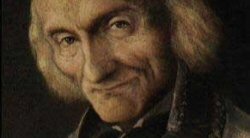
Photo at left: Leonardo Defillipis as St. John Vianney

Seattle, Wash., Mar 26, 2009 / 03:05 am (CNA).- A production of a play on the life of St. John Vianney will begin its U.S. tour this August, traveling to parishes, theaters, seminaries, universities and Catholic schools to help mark the Year of the Priesthood declared by Pope Benedict XVI.

The play "Vianney" is produced by Leonardo Defilippis, director and star of the film Thérèse. It tells the story of St. John Vianney, who lived from 1786 to 1859. The play will discuss the life of the saint, also known as the Curé of Ars, from his childhood during the French Revolution through his forty years as parish priest in the small village of Ars, France.

Pilgrims from across the globe flocked to the priest for confession and for his preaching. Ars itself changed from a lax community to a thriving Christian center.

Ordinary witnesses reported that the Virgin Mary regularly appeared at the rectory to converse with the saint, while the devil reportedly tried to harass him. Miracles of multiplying bread for the hungry, healing and prophecy also followed the saint.

Pope Benedict declared June 2009 through June 2010 as the Year of the Priesthood, dedicated to St. John Vianney.

Defilippis said in a press release that the focus on the saint is "right on target."

"The Curé of Ars is the saint who will inspire all of us, especially young people, with a deeper understanding of the heroic life of the priest," he added, predicting a "tremendous surge" in vocations because youth are seeking a "radical choice" to make a difference in the world.

"John Vianney points the way through his dramatic life of self-sacrifice and his struggle with evil," he said.

Defilippis remarked that "Vianney" is a good introduction to the life and vision of the saint because the live production "comes right into the local community, right into the parish itself" where it "speaks to individuals in much the same way that John Vianney did."

"It wasn’t through the media that he converted so many souls. It was in parish life, and with the example of his life and his incredible insight in the confessional. That’s what I want to bring to audiences– an intimate encounter with this powerful, yet humble priest, an encounter that will stay with them and draw them into a deeper commitment to prayer, repentance and holiness."

Father John Cihak, pastor, seminary professor and St. John Vianney scholar, said the saint is "pivotal" in "bringing about a renewal of holiness among priests and laity alike."

"We need a drama to help create this spiritual renewal. Writing books and articles about the Curé of Ars is good, but nothing gets a saint into the minds and hearts of people today better than drama and film," he added.

Bishop Ronald Gainer of Lexington, Kentucky said the play has the potential of doing "great good" in encouraging vocations to the priesthood and in encouraging "God’s call to each individual soul."

A feature film will reportedly follow the live production tour, pending funding and greater awareness of the effort.

The Battle Ground, Washington-based Saint Luke Productions is scheduling performances of "Vianney" for the 2009-2010 seasons. The production group provides the elements of professional theater such as lights, sets, costumes and an original musical score.

The website for "Vianney" is located at http://www.vianneydrama.com/

Monday, March 23, 2009

"YOUNG PEOPLE: DO NOT BE AFRAID TO MAKE DEFINITIVE DECISIONS"

VATICAN CITY, 21 MAR 2009 (VIS) - At 4.20 p.m. today, the Holy Father went to Stadio dos Coquieros in the Angolan capital city of Luanda. On arrival he toured the stadium - which has a capacity of 30,000 - by popemobile greeting the crowds of young people he had come to meet.

Commenting on the theme of the meeting, taken from the Book of Revelation, "Behold the dwelling of God is with men", the Pope assured the young people that "God makes all the difference, ... and more! God changes us; He makes us new!".

"God is the future of a new humanity, which is anticipated in His Church. When you have a chance, take time to read the Church's history. You will find that the Church does not grow old with the passing of the years. Rather, she grows younger, for she is journeying towards her Lord, day by day drawing nearer to the one true fountain overflowing with youthfulness, rebirth, the power of life".

He then addressed some remarks to young Angolans who have been maimed or disabled as a result of the war or landmines. "I think of the countless tears that have been shed for the loss of your relatives and friends", he said. "It is not hard to imagine the dark clouds that still veil the horizon of your fondest hopes and dreams".

"See how Jesus does not leave us without an answer; He tells us one thing very clearly: renewal starts from within; you will receive a power from on high. The power to shape the future is within you.

"It is within you", he added, "but how? Just as life exists within a seed. That is how Jesus explained it at a critical juncture in His ministry. ... Jesus spoke about the sower who sows in the field of the world, and He explained that the seed is His word and His miracles of healing. These are so few in comparison to the immense needs and demands of everyday life. And yet, deep within the seed, the future is already present, since the seed contains tomorrow's bread, tomorrow's life. The seed seems almost nothing. But it is the presence of the future, the promise already present. When it falls on good soil, it produces fruit, thirty, sixty and even a hundredfold".

"In your midst", he told the young people, "you have the new Bread, the Bread of future life, the Blessed Eucharist, which nourishes us and pours out the life of the Trinity into the hearts of all people".

"He gives Himself to us and we respond by giving ourselves to others, for love of Him. This is the way that leads to life; it can be followed only by maintaining a constant dialogue with the Lord and among yourselves". Yet "the dominant societal culture is not helping you to live by Jesus' word or to practise the self-giving to which He calls you in accordance with the Father's plan".

After encouraging his young audience not to be "afraid to make definitive decisions", the Pope added: "You do not lack generosity - that I know! But the idea of risking a lifelong commitment, whether in marriage or in a life of special consecration, can be daunting. You might think: ...'Can I make a life-long commitment now, without knowing what unforeseen events lie in store for me? By making a definitive decision, would I not be risking my freedom and tying my own hands?' These are the doubts you feel, and today's individualistic and hedonist culture aggravates them. Yet when young people avoid decisions, there is a risk of never attaining full maturity".

"Take courage!", he cried. "Dare to make definitive decisions, because in reality these are the only decisions which do not destroy your freedom, but guide it in the right direction, enabling you to move forward and attain something worthwhile in life. There is no doubt about it: life is worthwhile only if you take courage and are ready for adventure, if you trust in the Lord Who will never abandon you. Young people of Angola, unleash the power of the Holy Spirit within you, the power from on high!

"Trusting in this power, like Jesus, risk taking a leap and making a definitive decision. Give life a chance", the Holy Father concluded. "This is the life worthy of being lived, and I commend it to you from my heart. May God bless the young people of Angola!".

Friday, March 20, 2009

"Pope: Priests need True sense of Vatican II"

LONDON (UK Catholic Herald) - Pope Benedict XVI called for a young generation of priests who embrace a "correct" interpretation of the Second Vatican Council as he announced a "year for priests" on Monday.

Continuing the work of his predecessor, Pope John Paul II, in consolidating the work of the Council, the Pope explicitly supported Vatican II's reforms but insisted that they should not be exaggerated or understood as a complete rupture with the past. He also said that lay structures could not replace the ministry of the priesthood.

His comments coincided with the announcement of a year for priests beginning on June 19 and marking the 150th anniversary of St John Vianney, patron saint of the clergy. He told the Congregation for the Clergy that an indispensable struggle for moral perfection must dwell in every priestly heart. The Pope warned Church leaders against creating lay structures as solutions to a vocations crisis.

He said: "The centrality of Christ leads to a correct valuation of priestly ministry, without which there would be no Eucharist, no mission, not even the Church.

"It is necessary, then, to ensure that 'new structures' or pastoral organisations are not planned for a time in which it will be possible to 'do without' ordained ministry, on the basis of an erroneous interpretation of the promotion of the laity, because this would lay the foundations for a further dilution in priestly ministry, and any supposed 'solutions' would, in fact, dramatically coincide with the real causes of the problems currently affecting the ministry."

Pope Benedict stressed the sacramental nature of the ordained priesthood. "The missionary dimension of the priest arises from his sacramental configuration to Christ the head", he said, which requires "total adherence to what ecclesial tradition has identified as apostolica vivendi forma, which consists in participation... in that 'new way of life' which was inaugurated by the Lord Jesus and which the Apostles made their own."

Benedict XVI also underlined the importance of priestly formation and called for a younger generation of priests to be encouraged towards a "correct reading of the texts of the Vatican Council, interpreted in the light of all the Church's doctrinal inheritance".

He urged priests to be "present, identifiable and recognisable for their judgment of faith, personal virtues and attire - in the fields of culture and of charity which have always been at the heart of the Church's mission".

The Pope added that the priesthood is indispensable to the Church. Explaining the different dimensions essential to the mission of the priesthood, he named the ecclesial, communial, hierarchical and doctrinal aspects.

St John Vianney's relics will be brought to St Peter's Basilica by the Bishop Guy Bagnard of Belley-Ars to inaugurate the celebrations and the Pope will close the year by presiding over a "world meeting of priests" in St Peter's Square.

To mark the year for priests, which has "Faithfulness of Christ, Faithfulness of Priests" as its theme, the Congregation for Clergy will promote spiritual and pastoral exercises to highlight the role of the clergy in the modern world. Pope Benedict will also publish a collection of texts which deal with the aspects of the life and mission of priests in the modern world.

This year's Annuario Pontificio indicated a gradual increase in the number of vocations to the priesthood, although the number of vocations has been on a steady decline.

Thursday, March 19, 2009

Pope Benedict XVI speaks to the Bishops and Priests of Africa


APOSTOLIC JOURNEYOF THE HOLY FATHER BENEDICT XVITO CAMEROON AND ANGOLA (MARCH 17-23, 2009)

MEETING WITH THE BISHOPS OF CAMEROON

ADDRESS OF THE HOLY FATHER BENEDICT XVI

...

"Dear Brothers, the Bishop and his priests are called to maintain relations of close communion, founded on the one priesthood of Christ in which they share, albeit in different degrees. The quality of the bond uniting you with the priests, your principal and irreplaceable co-workers, is of the greatest importance. If they see in their Bishop a father and a brother who loves them, listens to them and offers them comfort in their trials, who devotes particular attention to their human and material needs, they are encouraged to carry out their ministry whole-heartedly, worthily and fruitfully. The words and example of their Bishop have a key role in inspiring them to give their spiritual and sacramental life a central place in their ministry, spurring them on to discover and to live ever more deeply the particular role of the shepherd as, first and foremost, a man of prayer. The spiritual and sacramental life is an extraordinary treasure, given to us for ourselves and for the good of the people entrusted to us. I urge you, then, to be especially vigilant regarding the faithfulness of priests and consecrated persons to the commitments made at their ordination or entry into religious life, so that they persevere in their vocation, for the greater holiness of the Church and the glory of God. The authenticity of their witness requires that there be no dichotomy between what they teach and the way they live each day.

In your dioceses, many young men are presenting themselves as candidates for the priesthood. We can only thank the Lord for this. It is essential that serious discernment should take place. With this in mind, I encourage you, despite the organizational difficulties that can sometimes occur at the pastoral level, to give priority to the choice and training of formators and spiritual directors. They must have a personal and profound knowledge of the candidates for the priesthood, and must be capable of offering them a solid human, spiritual and pastoral formation so as to make them mature and balanced men, well prepared for priestly life. Your constant fraternal support will help the formators to accomplish their task in the love of the Church and her mission."

Franciscan Friars of the Renewal Novitiate Class of 2009

The 17 newest members of the Franciscan Friars of the Renewal (CFR's)

(top row, l-r) Br. Pierre Toussaint Marie Guiteau, Br. Malachy Joseph Napier, Br. Gabriel Emmanuel Monahan, Br. Xavier Mariae Meiergerd, Br. Oisín Emmanuel Martin, Br. Bernardino Maria Soukup

(center row, l-r) Br. Guy LaFranz Bourgeois, Br. André Mary Manders, Br. Joseph Michael Fino, Br. Angelo Marie LeFever, Br. Alan Paul Fimister, Br. Joshua Mary Braum

(front row, l-r) Br. Isaiah Marie Hofmann, Br. Declan Joseph Gibson, Br. Peregrino Peña,
Br. Anthony Terrence Ocello, Br. Stephen Marie Dufrene

See more pictures from the novices' investiture HERE.

For those who are interested in joining the Franciscan Friars of the Renewal community this coming September, now is the time to apply. Please let them know if you are interested in submitting an application. They will have a formal two-week visit from July 5 - 19, 2009.

Contact: Fr. Gabriel Mary Bakkar, CFR
Vocation Director - Saint Joseph Friary
523 W. 142nd Street
New York, NY 10031
(212)281-4355

Read the CFR's March 2009 Vocations eLetter HERE.

Sisters of Our Lady Immaculate launch a new blog


The Sisters of Our Lady Immaculate have just started a new blog - stop by and check it out:

Wednesday, March 18, 2009

"Pope Urges Argentine Bishops to Promote Vocations"

Notes Challenges of Religious, Priestly, Married States

From ZENIT
VATICAN CITY, MARCH 17, 2009 (Zenit.org).- Benedict XVI is urging Argentine bishops to promote vocations to the priesthood by supporting solid family structures and encouraging youth ministry.

The Pope said this Saturday in an audience with bishops on their five-yearly visit to Rome.

He told them, "The essential role carried out by priests will lead you to make a great effort to promote priestly vocations."

The Pontiff added, "In this regard, it would be appropriate to project a more incisive program of matrimonial and family pastoral care, which takes into account the Christian's vocational dimension, as well as a more audacious program of youth pastoral care, which will help young people to respond with generosity to God's call to them."

Thirty-one Argentine bishops, headed by Cardinal Jorge Mario Bergoglio, primate of the country, listened to the Holy Father's words in the Vatican apostolic palace. That morning and on previous days, the Pope met personally with each bishop.

Benedict XVI reviewed the unique challenges facing each state of life in the Church -- bishops, priests, religious and laity -- and also appealed to the bishops to carry out "an effective and exacting discernment of the candidates to sacred orders."

At the same time, he continued, "it is necessary to intensify the formation of seminarians in all their dimensions: human, spiritual, intellectual, emotional and pastoral."

The Pope urged the Argentine bishops to intensify their mutual unity, which will be a "source of consolation in the grave commitment entrusted to you."

He continued, "Thanks to this affective and effective collegiality, no bishop is alone, because he is always closely united to Christ, Good Shepherd, and also, in virtue of his episcopal ordination and of the hierarchical communion, to his brothers in the episcopate and to him whom the Lord has chosen as successor of Peter."

The Pontiff asked the bishops to be close to their priests, "with the love of a father and brother."

He exhorted the prelates to be very charitable and prudent "when you have to correct teachings, attitudes or behavior that are unworthy of the priestly condition of your closest collaborators and which can, moreover, harm and confuse the faith and Christian life of the faithful."

He noted that "it is extremely important to recognize, appreciate and motivate the participation of religious in the diocesan evangelizing activity, which they enrich with the contribution of their respective charisms."

The Holy Father spoke about the lay faithful who "in virtue of their baptism, are called to cooperate in the building of the Body of Christ." He added, "To do so they must be led to have a more lively experience of Jesus Christ and of the mystery of his love."

Argentina has just over 40 million inhabitants of which approximately 92% are Catholics -- though less than 20% are practicing -- 2% are Protestants, 2% are Jews and 4% belong to other denominations.

Tuesday, March 17, 2009

"Pope: missionary activity "intrinsic" to the life of the priest"

From AsiaNews

Benedict XVI has proclaimed a Year for Priests, which will begin next June 19. During the year, he will proclaim St. John M. Vianney "Patron of all priests of the world." A "Directory for Confessors and Spiritual Directors" will be published, as well as a collection of texts by Benedict XVI on the essential themes of priestly life and mission in the present era.

Vatican City (AsiaNews) - Benedict XVI has proclaimed a special Year for Priests, during which he will proclaim Saint John M. Vianney (the Curé of Ars) "Patron of all the priests of the world." The pope himself made the announcement today, to participants in the plenary meeting of the Congregation for the Clergy, received in audience.

The speech to the Vatican dicastery for the clergy was also an opportunity, for Benedict XVI, for some statements about priests, beginning with the statement that missionary activity is "intrinsic" to priestly life, for which "there is an essential apostolic mandate: 'Go out into the whole world and preach the Gospel to all creation' (Mk. 16:15)." This distinguishes "ontologically" the mission of the priest from that of the lay Christian, in that for the priest the missionary dimension "arises from his sacramental configuration to Christ the Head." Because of this, on the one hand, there is a "necessary, even indispensable tension toward moral perfection, which must inhabit every authentically priestly heart," and on the other hand the necessity of the ministerial priesthood, without which there would not be the Eucharist, nor even the mission or the Church itself. "In this sense," the pope added, "it is necessary to be careful that new pastoral structures or organizations are not designed in view of a time when one will have to 'do without' the ordained ministry, departing from an erroneous interpretation of the proper promotion of the laity, because in this case the presuppositions would be put in place for a further dilution of the ministerial priesthood and the eventual presumed 'solutions' would dramatically coincide with the real causes of the contemporary problems connected to the ministry."

The mission of the priest "is carried out 'in the Church'. This dimension of ecclesiality, communion, hierarchy and doctrine is absolutely indispensable to any authentic mission, and alone guarantees its spiritual efficacy. The four aspects mentioned must always be recognized as being intimately correlated: mission is 'ecclesial' because no one proclaims or conveys himself, but within and through his own humanity every priest must be well aware of convening an Other, God himself, to the world. God is the only treasure that men ultimately want to find in a priest. Mission means 'communion' because it takes place in a unity and communion that only secondarily has significant aspects of social visibility. Moreover, these derive essentially from that divine intimacy in which the priest is called to be an expert, in order to be able to lead, with humility and trust, the souls entrusted to him to the same encounter with the Lord. Finally, the dimensions of 'hierarchy' and 'doctrine' suggest a reiteration of the importance of ecclesial discipline (a term related to 'disciple') and initial, permanent doctrinal formation, and not only theological.

The pope emphasized this last point both in order to stress the necessity of the permanent formation of the priest, and, in this regard, to reaffirm that the necessary interpretation of Vatican Council II must be made within the Church's tradition, and not as a "novelty" detached from it. "Mission," he said, in fact, "has its roots in a special way in good formation, developed in communion with the uninterrupted ecclesial tradition, without ruptures or temptations of discontinuity. In this sense, it is important to foster among priests, especially in the young generations, a correct reception of the texts of the Ecumenical Council Vatican II, interpreted in the light of the entire doctrinal heritage of the Church."

It appears equally urgent "to recover that awareness which drives priests to be present, identifiable, and recognizable for their judgment in faith, their personal virtues, and even their dress, in the areas of culture and charity, always at the heart of the Church's mission."

The pope, finally, will take part, at the closing of the Year for Priests - which begins next June 19 - in a "World Encounter of Priests" in St. Peter's Square, on June 19, 2010. During the Year for Priests, a "Directory for Confessors and Spiritual Directors" will also be published, together with a collection of texts by Benedict XVI on essential topics of priestly life and mission in the present era.

"Pope Cautions Against Dilution of Priestly Ministry"

Encourages Solid Doctrinal Education Among Clergy

From Zenit

VATICAN CITY, MARCH 16, 2009 (Zenit.org).- Benedict XVI is affirming the importance of the ministerial priesthood in the Church, and is calling for greater attention to the education of clergy.

The Pope said this today during an audience with participants of the Congregation for Clergy's plenary assembly, a Vatican communiqué reported. In this meeting, he also announced his intention to convoke a Year for Priests, beginning June 19, on the occasion of 150th anniversary of the death of the Curé of Ars.

The Pontiff cautioned his audience against confusing the baptismal and ministerial priesthood, stating that the two are distinguished on an ontological level, rather than by a variance in degrees. The second dimension, he said, "arises from [the priest's] sacramental configuration to Christ the Head."

This configuration, he noted, "brings with it, as a consequence, a cordial and total adherence to what ecclesial tradition has identified as 'apostolica vivendi forma,' which consists in participation in that 'new way of life' that was inaugurated by the Lord Jesus and which the Apostles made their own."

The Holy Father urged the bishops to ensure that "the 'new structures' or pastoral organizations are not planned for a time in which it will be possible to 'do without' ordained ministry, on the basis of an erroneous interpretation of the promotion of the laity, because this would lay the foundations for a further dilution in priestly ministry, and any supposed 'solutions' would, in fact, dramatically coincide with the real causes of the problems currently affecting the ministry."

He also admonished them to cultivate a "truly paternal" relationship with the priests, and to concern themselves with "their permanent education, above all in the doctrinal area."

The Pope stressed the importance of the ministry, without which "there would be no Eucharist, no mission, not even the Church" and he recalled that the mission of the priest "has its roots in a special way in a good formation, carried out in communion with unbroken ecclesial Tradition, without pausing or being tempted by discontinuity."

"In this regard," he continued, "it is important to encourage priests, especially the young generations, to correctly read the texts of the Second Vatican Council, interpreted in the light of all the Church's doctrinal inheritance."

Visibility

The Pontiff spoke about the urgent need for priests to be "present, identifiable and recognizable -- for their judgment of faith, personal virtues and attire -- in the fields of culture and of charity which have always been at the heart of the Church's mission."

He said the mission of the priest concerns the Church, communion, hierarchy and doctrine, and added that these aspects should not be separated.

He explained: "The mission is ecclesial because no one announces or brings themselves, but rather in and through his own humanity, every priest should be very conscious of bringing Another, God himself, to the world. God is the only treasure that, definitively, mankind wishes to find in a priest."

The Holy Father said the mission concerns communion "because it takes place in a unity and communion which only at a secondary level possess important aspects of social visibility. These, moreover, are derived essentially from that divine intimacy of which the priest is called to be an expert, so that he can bring, with confidence and humility, the souls entrusted to him to the same meeting with the Lord."

He said that "the 'hierarchical' and 'doctrinal' dimensions emphasize the importance of ecclesiastical discipline -- a term related to that of 'disciple' -- and of doctrinal -- not just theological, initial and permanent -- formation."

The Pope concluded by urging those present to discover the centrality of Jesus Christ who gives meaning and value to the ministerial priesthood.

He added, "As Church and as priests we announce Jesus of Nazareth, Lord and Christ, crucified and risen, Sovereign of time and history, in the joyful certainty that this truth coincides with the deepest hopes of the human heart."

"Better awareness of all vocations will lead to more priests, pope says"

From Catholic News Service

By Cindy Wooden
Catholic News Service

VATICAN CITY (CNS) -- The key to increasing the number of candidates for the priesthood is helping all Catholics -- including married couples and youths -- understand that God is calling them to serve him and the church in a special way, Pope Benedict XVI said.

Meeting 30 bishops from Argentina March 14, the pope called for "a more incisive pastoral program for marriage and family life" that emphasizes that each Christian has a specific vocation and for "a bolder youth ministry that helps the young to respond with generosity to God's call."

The bishops were making their "ad limina" visits to report on the status of their dioceses.

"The fundamental role that priests play should lead you to undertake a great effort to promote priestly vocations," the pope told them.

Pope Benedict said the fatherly attitude of love and encouragement that must characterize a bishop's relationship to his priests is even more important in situations where a priest is in difficulty.

"I exhort you to demonstrate charity and prudence when you must correct teachings, attitudes or behaviors that are not fitting for the priestly character of your closest collaborators and that also can damage and confuse the Christian faith and life of the faithful," the pope told them.

The church in Argentina will grow and thrive if all the faithful are helped to have a "living experience of Jesus Christ and the mystery of his love," the pope said.

"Constant contact with the Lord through an intense life of prayer and an adequate spiritual and doctrinal formation will increase in Christians the pleasure of believing and celebrating their faith and their joy at belonging to the church, leading them to participate actively in the mission of proclaiming the good news to all," the pope said.

"Pope declares year of the priest to inspire spiritual perfection"

From Catholic News Service
By Carol Glatz

VATICAN CITY (CNS) -- Pope Benedict XVI declared a year of the priest in an effort to encourage "spiritual perfection" in priests.

The pope will open the special year with a vespers service at the Vatican June 19 -- the feast of the Sacred Heart of Jesus and the day for the sanctification of priests. He will close the celebrations during a World Meeting of Priests in St. Peter's Square June 19, 2010.

The pope made the announcement during an audience March 16 with members of the Vatican Congregation for Clergy.

He met with some 70 participants of the congregation's March 16-18 plenary assembly, which focused on the missionary identity of the priest and his mission to sanctify, teach and govern.

During this jubilee year, the pope will also proclaim St. John Vianney to be patron saint of all the world's priests. At present he is considered the patron saint of parish priests.

This year marks the 150th anniversary of the death of this 19th-century saint who represents a "true example of a priest at the service of the flock of Christ," the pope said.

St. John Vianney is widely known to Catholics as the Cure (parish priest) of Ars who won over the hearts of his villagers in France by visiting with them, teaching them about God and reconciling people to the Lord in the confessional.

In his address, Pope Benedict said the priestly ministry consists of total adherence to the ecclesial tradition of participating "in a spiritually intense new life and a new lifestyle which was inaugurated by the Lord Jesus and which the apostles made their own."

Priestly ordination creates new men who are bestowed with the gift and office of sanctifying, teaching and governing, he said.

The pope underlined the necessary and "indispensable struggle for moral perfection which must dwell in every authentically priestly heart."

The pope said he was calling for the special year for priests in an effort to foster the priest's yearning "for spiritual perfection, upon which the effectiveness of their ministry principally depends."

"The awareness of the radical social changes over the past decades must stir the best ecclesial energies to look after the formation of priestly candidates," the pope said.

This means great care must be taken to ensure permanent and consistent doctrinal and spiritual formation for seminarians and priests, he said, specifying the importance of passing down, especially to younger generations, "a correct reading of the texts of the Second Vatican Council, interpreted in the light of all the church's doctrinal heritage."

Priests must also be "present, identifiable and recognizable -- for their judgment of faith, their personal virtues and their attire -- in the fields of culture and charity which have always been at the heart of the church's mission," he said.

"The centrality of Christ leads to a correct valuation of ordained ministry," he said, adding that, without priestly ministry, there would be no Eucharist, no mission and even no church.

Therefore, he said, it is crucial to make sure that new bodies or pastoral organizations are not set up "for a time in which one might have to 'dispense with' ordained ministry based on an erroneous interpretation of the rightful promotion of the laity."

"This would lay the foundations for further diluting the priestly ministry, and any supposed 'solutions' would dramatically coincide with the real causes of the problems currently connected with the ministry," he said.

Monday, March 16, 2009

'ST. JEAN MARIE VIANNEY: PATRON SAINT OF ALL PRIESTS"

VATICAN CITY, 16 MAR 2009 (VIS) - "Faithfulness of Christ, faithfulness of priests" is the theme of the Year for Priests announced today by the Holy Father, according to a communique issued by the Holy See Press Office.

The Pope will inaugurate the Year on 19 June, presiding at Vespers in St. Peter's Basilica where the relics of the saintly 'Cure of Ars' will be brought for the occasion by Bishop Guy Bagnard of Belley-Ars, France. He will close the year on 19 June 2010, presiding at a "World Meeting of Priests" in St. Peter's Square.

During the course of the Year, Benedict XVI will proclaim St. Jean Marie Vianney as patron saint of all the priests of the world. A "Directory for Confessors and Spiritual Directors" will also be published, as will a collection of texts by the Supreme Pontiff on essential aspects of the life and mission of priests in our time.

The Congregation for the Clergy, together with diocesan ordinaries and superiors of religious institutes, will undertake to promote and co-ordinate the various spiritual and pastoral initiatives which are being organised to highlight the role and mission of the clergy in the Church and in modern society, and the need to intensify the permanent formation of priests, associating it with that of seminarians.

OP/YEAR FOR PRIESTS/... VIS 090316 (230)

"HOLY FATHER ANNOUNCES A SPECIAL YEAR FOR PRIESTS"

VATICAN CITY, 16 MAR 2009 (VIS) - This morning in the Vatican the Holy Father received members of the Congregation for the Clergy, who are currently celebrating their plenary assembly on the theme: "The missionary identity of priests in the Church as an intrinsic dimension of the exercise of the 'tre munera'".

"The missionary dimension of a priest arises from his sacramental configuration to Christ the Head", said the Pope. This involves "total adherence to what ecclesial tradition has identified as 'apostolica vivendi forma', which consists in participation ... in that 'new way of life' which was inaugurated by the Lord Jesus and which the Apostles made their own".

Benedict XVI highlighted the "indispensable struggle for moral perfection which must dwell in every truly priestly heart. In order to favour this tendency of priests towards spiritual perfection, upon which the effectiveness of their ministry principally depends, I have", he said, "decided to call a special 'Year for Priests' which will run from 19 June 2009 to 19 June 2010". This year marks "the 150th anniversary of the death of the saintly 'Cure of Ars', Jean Marie Vianney, a true example of a pastor at the service of Christ's flock".

"The ecclesial, communional, hierarchical and doctrinal dimension is absolutely indispensable for any authentic mission, and this alone guarantees its spiritual effectiveness", he said.

"The mission is 'ecclesial'", said the Pope, "because no-one announces or brings themselves, ... but brings Another, God Himself, to the world. God is the only wealth that, definitively, mankind wishes to find in a priest.

"The mission is 'communional' because it takes place in a unity and communion which only at a secondary level possess important aspects of social visibility. ... The 'hierarchical' and 'doctrinal' dimensions emphasise the importance of ecclesiastical discipline (a term related to that of 'disciple') and of doctrinal (not just theological, initial and permanent) formation".

Benedict XVI stressed the need to "have care for the formation of candidates to the priesthood", a formation that must maintain "communion with unbroken ecclesial Tradition, without pausing or being tempted by discontinuity. In this context, it is important to encourage priests, especially the young generations, to a correct reading of the texts of Vatican Council II, interpreted in the light of all the Church's doctrinal inheritance".

Priests must be "present, identifiable and recognisable - for their judgement of faith, personal virtues and attire - in the fields of culture and of charity which have always been at the heart of the Church's mission".

"The centrality of Christ leads to a correct valuation of priestly ministry, without which there would be no Eucharist, no mission, not even the Church. It is necessary then, to ensure that 'new structures' or pastoral organisations are not planned for a time in which it will be possible to 'do without' ordained ministry, on the basis of an erroneous interpretation of the promotion of the laity, because this would lay the foundations for a further dilution in priestly ministry, and any supposed 'solutions' would, in fact, dramatically coincide with the real causes of the problems currently affecting the ministry".

AC/PRIESTS MISSION/CPC VIS 090316 (530)

"Military padres a rare breed"


From Canada.com
By Matthew Fisher

KANDAHAR, Afghanistan — Padre Bastien Leclerc is one of the rarest of the rare. He is a Roman Catholic priest and a cleric in the Canadian Forces.

Just as the Catholic Church is having a devil of a time finding priests for its parishes across Canada, it has become more and more difficult for the military to find priests to fill billets at bases in Canada and overseas.

Forty of the 84 Roman Catholic positions in the forces are now filled by lay pastoral associates. Four more are lay deacons, meaning that the 40 priests still in uniform have become a minority within their own chaplaincy.

"It is very hard for a bishop to give up a priest but it is even worse if the priest is young and I was only 34 when I joined the military,” said Father Leclerc, whose rank is major and is Task Force Afghanistan’s senior chaplain.

"There is such a shortage of priests in Canada that some have two or three parishes and spend all their time running from masses to baptisms to marriages. I admire the priests who can do that, but that was not me."

A priest who was a padre suggested to Leclerc, who was not keen on parish life but enjoyed his work at the time with street kids in Quebec, that joining the military might be his calling.

"I took spiritual direction and prayed and signed on the dotted line," he said, pausing for a moment as a pair of fighter jets screamed past his window. "My bishop reluctantly agreed. Ten years later he can see how much happier I am."

Nevertheless Leclerc, unlike some other military priests, remains on loan to the forces, and could be called back to Quebec at any time.

"The bishop still has that option but I think he knows that he would only get half a priest back," Leclerc said with a boisterous laugh.

Leclerc’s home base is Edmonton. He has done a tour of duty in Bosnia and is now near the front end of 9 months in the heat and dust of southern Afghanistan.

Part of his duties at the Kandahar Airfield include celebrating a mass every Saturday night for a congregation that includes not just Canadians, but soldiers from many other NATO countries and devout Filipino civilian workers who provide music for the service. Leclerc also often fills in for an American padre at a mass on Sundays.

Like all padres, Leclerc went through boot camp — minus weapons training — when he joined the military. The deployment to Afghanistan was preceded by months of pre-mission training at Wainwright, Alta.

During exercises there that simulated serious casualty situations "we made training prayers," Leclerc, explaining with another big laugh that "I had to begin those prayers by stating, ‘I am faking a prayer.’

"It is different work here than in Canada. The guys are younger and we deal a lot with family issues. Some will leave a newborn and come back to a walking kid who looks at them and wonders, ‘Who the heck is that guy?’”

There is also the immense challenge of helping soldiers to deal with grief.

"There is only so much that a man can take sometimes," he said. "When they lose a friend, and sometimes more than one, they sometimes ask questions about what we are doing here."

Leclerc was philosophical about the inexorable trend toward more Roman Catholic lay ministers in the military.

"The lay ministers bring a lot of different ways of doing things, of thinking and of reflecting, and there is a real richness to that," he said.

The future of the Catholic ministry within the military was already evident in how its representatives have been divided into three groups, with priests, deacons and pastoral associates.

"A lot of our future Catholic chaplains will be permanent deacons." Leclerc said. "These are usually married people who have been pastoral associates. They are not allowed to say mass but they can do weddings and baptisms."

Leclerc considers himself to be doubly blessed to be a padre and to have been given the "experience of a lifetime" by being posted to Afghanistan.

"To be here or anywhere in the world with our soldiers is a privilege," he said. "Some people, especially in Quebec, have questioned this mission. But it is something special to be part of a team that is trying to improve the quality of life here."

"Seminarians advised to stand firm on their calling"

From Nyasa Times

Bishop of Chikwawa Diocese, the right Reverend, Peter Musikuwa has advised seminarians in the country to avoid being swayed by earthly things in order to answer their priestly calling.

“There are so many challenges and temptations which can push you away from the path to the priesthood vocation but can easily be avoided if you remain focused and depend on prayer,” Musikuwa said.

He said like Jeremiah in the Bible who tried to give excuses to God's calling, many more young priests also get trapped in things which were against the calling to priesthood.

Musikuwa who is also Episcopal Conference of Malawi Bishop Chairperson for seminarians was speaking at Kachebere Major Seminary during presentation of Cassocks to first year seminarians in Mchinji.

The Prelate said seminarians were required to follow both God's teaching and the teaching of the church to successfully respond to the vocation.

He said the Catholic Church is faced with an increasing demand for the clergy due to the swelling number of Christians who need their services.

Said Musikuwa, “The church today is looking up to the clergy to save their souls. You should live the life of Jesus Christ to bring salvation to mankind.”

Musikuwa added that to fulfill that mission, there was also need for the seminarians to have a strong will and determination in the process of pursuing the path to priesthood.

“The path to the priestly vocation is not all rosy, there are hardships which you have to overcome to make it,” Musikuwa emphasized.

Rector for Kachebere Major Seminary, Reverend Father Denis Chitete thanked Musikuwa for the word of encouragement which he said was not only for the aspiring priests but also those already ordained.

However, Chitete appealed to parents of the seminarians to provide the institution the necessary support so that the work of molding them (young seminarians) was a joint one.

“The responsibility of shaping these young ones rests on both of us the priests and the parents,” Chitete observed.

He therefore called for cooperation from the seminarians, saying formatters in the seminary were there to provide the necessary spiritual direction to only those who were also willing to take advice.

During the Cassock Day, 36 seminarians from Blantyre, Chikwawa, Dedza, Lilongwe, Mzuzu and Zomba Dioceses received their robes at a function that was characterized by various sporting activities and later a social evening.

Back to blogging

Another diaconate formation weekend behind me - now it's back to work and blogging!

Friday, March 13, 2009

"We're hiring: New drive for vocations in diocese"

From the New Ross Standard
By Conor CULLEN

BOOKLETS, leaflets, DVDs, CDs, prayer cards and even Facebook will be among the means used by the Diocese of Ferns to spread the word about the priesthood as it seeks to bolster the dwindling numbers of priests in Co. Wexford.

'Is God Calling You?' is the question that was being asked as the Ferns Diocesan Vocations Programme was officially launched by Bishop Denis Brennan at Bride Street Church in Wexford last week.

The position in the diocese at the moment and the work that will be undertaken by the eight strong Vocations Team was outlined by Fr. Joe McGrath, who is joined on the team by Fr. Jim Finn, (Vocations Director), Fr. Gerry O'Leary, Fr. Roger O'Neill, Fr. Jim Doyle, Fr. Tom Kehoe, Fr. Odhran Furlong and Fr. Brian Whelan.

At the moment there are 89 priests working in the Diocese of Ferns who were ordained here and six from outside the diocese. This is down from 110 in 1981.

The challenges facing the diocese are reflected by the number of retired priests, which now stands at 17, compared to just three in 1981.

The age profile is also worrying as the majority of the priests working the diocese were ordained in the 1950s (5), '60s (25) and '70s (19). Seventeen priests were ordained in the 1980s, 18 in the '90s, but just five have been ordained since 2000.

At the moment just one young man from Co. Wexford, James Cullen from Castlebridge, is training to become a priest. However, the diocese has also accepted an application from Pat Duffy from Co. Wicklow, a former teacher and a late vocation.

Fr. McGrath acknowledged that the diocese was in 'a difficult position', but determined to get on with things. 'We're not interested in restoring the past. We want to prepare for the future,' he said.

In an effort to reach as many people as possible the diocese also has CDs, DVDs, posters, bookmarks and will be using its website – www.ferns.ie – and a new Facebook group, to be established by Fr. Furlong.

'Our idea is to get as much information out there to young people about what a priest does,' said Fr. McGrath, adding that they will also be liaising with teachers and going to schools to talk about vocations.

Officially launching the programme, Bishop Denis Brennan 'a vocation is a mysterious thing, an affair of the heart'.

'It's partly a call, partly a response, but we can never fully own it or explain it,' said Bishop Brennan, adding that he hoped the vocations programme would 'reach and touch many, many people'.

The Bishop acknowledged that while they are one of the few organisations 'hiring' in the midst of the current recession, he would hope that's not a reason anyone would have for joining the priesthood. 'We'd like people to come to us because of who we are and what we do,' he said.

Fr. O'Leary stressed that when it comes to recruiting it will be a case of 'quality not quantity', pointing out the rigourous acceptance process for would-be priests in the diocese.

Thursday, March 12, 2009

"Recruiting tomorrow’s priests and religious through the internet"

From Catholic Online

BERWYN, IL (MARCH 11, 2009)- When it comes to finding youth who will become tomorrow’s Catholic priests, brothers and sisters, things have moved to the internet.

Eighty percent of new vocations now come from the internet, a vocations director of a major men’s religious said recently at the annual Here I Am Lord youth conference this past weekend in St. Charles, IL.

Hundreds of youth converged March 6 – 8 at St. Patrick’s Catholic parish in this western Chicago suburb to hear top Catholic speakers and musicians help youth find their calling in life, whether it be marriage, the single life (single life is not a vocation officially recognized [liturgically] by the Church - Consecrated Virginity is), or a religious calling.

Among priests and sisters staffing the booths, some were very experienced in using websites, enewsletters and online advertising, while others were just getting their feet wet, perhaps feeling a little behind in things.

“I know I have to learn about these things,” one priest said. He knew how to use a word processing program, but that was about it. Kevin Banet, TreeFrogClick president, was happy to explain to him about enewsletters, and how the popular social media site, Facebook works.

Once a person signs up with Facebook as a member, which is free, one can invite others to become a friend. When they agree to accept the invitation, they can see one's profile and what other friends have written on the profile “wall.”

A religious brother at the conference said, “When I get an email from someone on Facebook asking me to be their friend, I naturally assume that it is because they are interested in a vocation. So I say yes.”

Promotion is all about relationships, and the internet helps greatly. It is something that is not easy, but it takes knowledge, experience and persistence.

Wednesday, March 11, 2009

Fr. Richard Neuhaus - Having The Courage to Decide

While he is speaking in the context of marriage, what Fr. Neuhaus says certainly pertains to all vocations - The Courage to Decide.


"Second South African Catholic Priest Killed by Thugs"

From Catholic Information Service for Africa

The Catholic Church in South Africa, a nation plagued by violent crime, is mourning the murder of a second priest in slightly over a week.

Fr Lionel Sham, the parish priest of Mohlakeng in Johannesburg Archdiocese, was killed on Saturday, hours after being abducted from his home. He was 66.

Archbishop Buti Tlhagale of Johannesburg announced that police had found the body of Fr Sham, who went missing on Friday night.

Fr. Sham's death follows that of Fr Daniel Matsela Mahula, from Klerksdorp Diocese, on February 27. Fr Mahula was killed while driving his car by four hitch-hikers. A young priest, born on June 6, 1975, and ordained on December 22, 2002, he ministered at St. Peter's Catholic Church in Jouberton at the time of his death.

"All we can do now is pray with the family, the parish of Mohlakeng and the many people who loved and knew Lionel," said Archbishop Tlhagale. "I wish to express my own gratitude to the countless people who have looked for Fr Lionel and who have prayed for his safe return."

Archbishop Buti spoke of the great love Fr Sham shared with those he came into contact with. He was a friend and mentor to many people. He had worked at Boys Town, in various parish assignments, as administrator of the Cathedral of Christ the King in Johannesburg, rector of the Orientation Seminary in Welkom, Secretary of the Seminary Department of the Bishops Conference, Vocation Director and Vicar General.

Memorial services will begin Wednesday until next Monday. The funeral service will be on Tuesday, March 17 at the Cathedral of Christ the King.

"Vatican visits of women religious welcomed by most but not by all"

From Catholic News Agency

Photo at left: Sr. Eva-Maria Ackerman FMSG. Sister is helping coordinate the Apostolic Visitations

Hamden, Conn., Mar 10, 2009 / 04:12 pm (CNA).- With a review of American seminaries recently completed, the Vatican is undertaking a series of visits to “look into the quality of life” of the women’s religious communities in the U.S. However, one sister sees the Visitations as “investigations” and is encouraging her fellow religious to engage in “non-violent” resistance.

Initially Sr. Sandra M. Schneiders’ reaction to the January 30, 2009 announcement was limited to those she emailed, but soon her words found their way onto the internet and were published with her permission by the National Catholic Reporter.

“We just went through a similar investigation of seminaries, equally aggressive and dishonest,” began Sr. Sandra’s email to a few of her colleagues.

“I do not put any credence at all in the claim that this is friendly, transparent, aimed to be helpful, etc. It is a hostile move and the conclusions are already in. It is meant to be intimidating. But I think if we believe in what we are doing (and I definitely do) we just have to be peacefully about our business, which is announcing the Gospel of Jesus Christ, fostering the Reign of God in this world,” Sr. Sandra wrote.

Sr. Eva-Maria Ackerman, a Franciscan Martyr of St. George religious who is helping conduct the Apostolic Visitations, told CNA that Mother Clare Millea is receiving quite a different reception. Mother Clare has been entrusted by the Vatican with carrying out the approximately 400 visits.
“Mother Clare has been impressed with the number of requests that have been made already and she has received a great deal of good feedback about the approach she is taking in this first phase of soliciting voluntary input.”

Sr. Eva-Maria also countered Sr. Sandra’s assertion that the Visitations are operating with foregone conclusions.

“Mother Clare is open to the Spirit’s guidance through this whole process and is focusing on each phase of the Visitation as it is scheduled. She has not drawn any conclusions but rather is desirous of hearing about the reality of each Congregation as it will be expressed by the Superiors General in the first phase,” she said.

Speaking at a press conference to announce the launch of the Visitations this past January, Sr. Eva-Maria explained the three step process.

“First, Mother Clare will solicit voluntary input from the superiors general through inviting them to make personal contacts with her in Rome or in the United States. During the second stage, the major superiors in the United States will be asked for information such as statistics, activities and community practices.”

She continued, “selected on-site visits will be made during the third stage. During this time, the sisters will have an opportunity to share with the visitation teams their joys and hopes, challenges and concerns about their lives as women religious in the Church today. The final stage will be the compilation and delivery of a comprehensive and confidential review by Mother Clare to Cardinal Rodé.”

When the Vatican undertook its 2005-2006 apostolic visits to U.S. seminaries, the visitors—groups led by a bishop but also including laity—used a working document or Instrumentum Laboris to evaluate the places they visited.

Sr. Eva-Maria explained the current status of the visitations to CNA, saying, “the writing of the Instrumentum Laboris is in process and we are currently involved in phase one of the Visitation which is the individual meetings of Superiors General with Mother Clare.”

“The visitation team is focusing on the quality of life of the religious institute itself,” she added.

When CNA asked Sr. Eva-Maria if the team would be looking at the number of vocations to each community, she replied, “While religious vocations are a concern for Mother Clare and all religious congregations, it will not be a primary focus of the visits. Of course, all are encouraged to continue to pray for an increase in vocations to religious life!”

Although Mother Clare reports that she has received “a great deal of good feedback about the approach she is taking in this first phase,” Sr. Sandra is encouraging resistance to the visits.

“We cannot, of course, keep them from investigating,” Sr. Sandra wrote in her email. “But we can receive them, politely and kindly, for what they are, uninvited guests who should be received in the parlor, not given the run of the house. When people ask questions they shouldn't ask, the questions should be answered accordingly.”

“…This is not mutual and it is not a dialogue,” she continued.

“The investigators are not coming to understand -- believe me, we found that out in the seminary investigation. So let's be honest but reserved, supply no ammunition that can be aimed at us, be non-violent even in the face of violence, but not be naive. Non-violent resistance is what finally works as we've found out in so many arenas,” Sr. Sandra said.

Mother Clare sees things differently though. As Sr. Eva-Maria explained to CNA, “With the mandate given to her by the Holy See as Apostolic Visitator, she has much confidence that she will be met with respect and openness.”

Sr. Eva-Maria also underscored the support that the Visitations are receiving from other members of the Church via its Apostolic Visitations Prayer Support page on Facebook. The group has grown to almost 350 members, since being launched in February.

One sister commented on the Facebook page that Mother Clare should be “assured of the enthusiasm, prayers and support of all the Carmelite Sisters of the Most Sacred Heart of Los Angeles. You will find no unhappy Sisters here. God's strength and Holy Wisdom be your constant blessing.”

Sister Anne Lythgoe, also writes of her own experience as a religious. “As a Dominican for 34 years I have been deeply blessed by my vocation and have had a happy and productive life. You will find many Christ-centered, prayerful, generous and holy women all over the US. There is much to esteem among the religious of the US who have truly embraced the call of Vatican II to renew and refresh religious life. So much wonderful service as been done in the name of Our Lord and for the Church.”

Mother Clare is currently hoping to finish scheduling meetings with the various Superiors General by March 15, and will begin her on-site visits in Los Angeles on June 2.

For the latest on the Apostolic Visitations, please visit http://www.apostolicvisitation.org/en/index.html

Tuesday, March 10, 2009

Pope Benedict XVI Says Contemplatives Give Breath to World

From ZENIT

ROME, MARCH 9, 2009 (Zenit.org).- Contemplative communities are called to be a type of "spiritual lung" for the world, so that spiritual "respiration" is not strangled by the bustle of cities, says Benedict XVI.

The Pope said this today when he visited the Oblate Sisters of Santa Francesca Romana. He stopped at the convent after having visited the headquarters of Rome's civil authorities, where he addressed the mayor and other civil leaders.

Today is the feast day of St. Francesca (1384-1440), whom the Holy Father referred to as "the most Roman of saints."

After spending some time in adoration of the Blessed Sacrament and in veneration of the saint's body, the Pope addressed the sisters and students that reside at the center.

Referring to his spiritual exercises last week with the members of the Curia, the Holy Father said "he had felt once again how indispensable silence and prayer are."

He noted how the convent is located at the heart of the city, saying, "How can we not see in it the symbol of the need to return the spiritual dimension to the center of civil coexistence, to give full meaning to the multiple activities of the human being?"

The Bishop of Rome told the nuns: "Your community, together with the other communities of contemplative life, is called to be a sort of 'spiritual lung' of society, so that the performance, the activism of a city, is not devoid of spiritual 'respiration,' the reference to God and his plan of salvation. [...]

"A singular balance is lived here between religious and secular life, between the life of the world and outside of the world. A model that was not born in a laboratory, but in the concrete experience of a young Roman woman: written -- it could be said -- by God himself in Francesca's extraordinary existence.

"It is no accident that the walls of this environment are decorated with images of her life, demonstrating that the real building that God wishes to construct is the life of the saints."

In this context, the Pope stressed that also today "Rome needs women who are all for God and for their neighbor; women able to recollect themselves and give generous and discreet service; women who are able to obey their pastors, but also able to support and motivate them with their suggestions."

This vocation "is the gift of a maternity that is made one with religious oblation, modeled after Mary," the Pontiff reflected. "Mary's heart is the cloister where the Word continues to speak in silence, and at the same time is the furnace of a charity that leads to courageous gestures, and also to a persevering and hidden generosity."

Monday, March 9, 2009

Pope Benedict XVI Notes Vocational Renewal Through Retreat

From ZENIT:

VATICAN CITY, MARCH 8, 2009 (Zenit.org).- After his Lenten retreat, Benedict XVI is sharing highlights of his experience and thanking the preacher for pointing to Jesus in the Church, in his Word, and in the Eucharist.

The Pope affirmed this Saturday in an address at the conclusion of his Lenten spiritual exercises. The retreat was given to him and the Roman curia by Cardinal Francis Arinze, retired prefect of the Congregation for Divine Worship and the Discipline of the Sacraments.

The Pontiff thanked the cardinal, acknowledging that the meditations "led, enlightened, helped and renewed us in our priesthood."

He told the retreat preacher, "You have not given us theological acrobatics, but you have given us sound doctrine, the good bread of our faith."

The spiritual exercises began on March 1 and centered on the theme, "The Priest Meets Jesus and Follows Him."

Word of God

The Holy Father noted the retreat's focus on "the Sacred Scriptures, the Word of God that gives us true nourishment," and the cardinal's presentation of this Word "in complete relevance."

He affirmed that he "admired and enjoyed this concrete experience" of Cardinal Arinze's 50 years in the priesthood that helped to "concretize our faith."

Benedict XVI spoke about the story of the first disciples who followed Jesus after his invitation, "Come and see." He stated: "To see we must come, we must walk with Jesus, who always precedes us.

"Only in walking with and following Jesus can we see." He told the cardinal, "You have shown us where Jesus lives, where his dwelling is: in the Church, in his Word, in the most holy Eucharist."

Encountering Jesus

Speaking to Radio Vatican Saturday, Cardinal Arinze described the spiritual exercises as a "very positive" experience: "Seeing all meditating, praying with Jesus in the middle, daily Eucharistic adoration, and then an individual time for each, in total silence [...] It's very uplifting and positive for the Church."

The cardinal explained that in the daily preaching he wanted to transmit a central message: "The priest accepts the invitation of Jesus, he finds him and follows him. And as the Apostles were with him three years, we try to stay with Jesus so that all our lives become as the offertory procession [in the mass]."

The priest, like everyone else, he said, encounters Jesus by "believing in him, encounters Jesus in the Church, in the Most Holy Sacrament of the Eucharist. He encounters Jesus in the people that serve the Church, he encounters Jesus in the people that suffer: the people who have need for justice, peace and solidarity."

Cardinal Arinze continued: "Find Jesus in prayer, find Jesus in the Sacred Scripture, where Jesus speaks to us. This is the heart of these thoughts with Scripture and the liturgy as guides."

"I tried to share my Jesus, if I may say so -- without the pretense of being a great teacher, but trying, with the Scripture and liturgy as guides, to follow Jesus and to share I could," he concluded.

Thursday, March 5, 2009

"South Korea Church trains new priests for North"

From Reuters
By Jon Herskovitz and Kim Junghyun

SEOUL (Reuters) - The Roman Catholic Church of South Korea has started training priests to serve in North Korea, a country criticized by the United States and others for stamping out religion, for the first time in about 40 years.

"It's not something North Korea wants us to do. We are doing this with an eye toward the future when the two Koreas unify," Monsignor Matthew Hwang In-kuk, the Episcopal vicar of the Pyongyang Diocese, said in an interview with Reuters on Thursday.

Communist North Korea, which Church officials estimated had a Catholic community of about 55,000 just before the 1950-53 Korean War, does not allow priests to be permanently stationed in the country.

The five candidates began studies a few days ago for the priesthood, Monsignor Hwang said. The Church plans to recruit a new group each year.

It will take about 10 years to complete preparations and even then, they may not be allowed into the North.

Priests from the South do occasionally visit the hermit state, usually to accompany the delivery of aid or the start of a humanitarian project, and a visiting priest reportedly celebrated mass in Pyongyang when Pope John Paul II died.

There used to be about 20 priests in the Pyongyang diocese, which was incorporated into the Seoul diocese in 1970. The priests worked in the South but only seven of the group are still active, including Monsignor Hwang, who was born in Pyongyang in 1936 and fled North Korea during the Korean War at the age of 14.

"At the time when the Pyongyang diocese was incorporated into the Seoul diocese, it was a precondition for priests like myself to go back as soon as the two Koreas unify," he said.

The same applies to the five who just entered training for the priesthood, who are not been given any special preparation for serving in one of the world's most isolated states.

NEW PUSH NORTH

The Church in South Korea launched a new push into the North about three years ago when the Vatican named Nicholas Cheong Jin-suk as the new cardinal for South Korea. He also serves as the apostolic administrator of Pyongyang.

What is believed to be the first Catholic community in Pyongyang was formed in 1896. In 1927, the Pyongyang apostolic prefecture was carved out of the then Diocese of Seoul.

Japan's defeat in World War Two brought an end to its 1910-1945 colonial rule over Korea. The peninsula was then divided along Cold War battle lines and the new communist leaders in the North crushed any religion as they tried to build a cult of personality around state founder Kim Il-sung, historians say.

Priests and religious leaders were either killed or sent to political prison camps. Those practicing any faith faced punishment or death while the North's state propaganda launched a process to turn Kim Il-sung into a deity who would lead the masses to a place that would be a heaven on Earth.

Although the North says it protects religion, the U.S. State Department said in a report in 2008: "Genuine religious freedom does not exist." It quotes defectors as saying the North executes and arrests members of underground Christian churches.

The North built several churches, including a Catholic one about 20 years ago to show it allowed the practice of religion, but human rights groups have described the move as "a sham."

The South Korean Catholic Church will not say what it estimates to be the Catholic population in the North but outside groups have said it numbers in the few hundreds to about 4,000.

There are about 4.5 million Catholics in South Korea, which has a population of about 49 million and one of the largest percentages of Catholics of any country in Asia.

Monsignor Hwang has an old map of Pyongyang hanging in his office and gladly points out where his home used to be and how close his former church -- now long gone -- was to what has now become Kim Il-sung Square in the center of the city.

"We (the priests from the North) will perhaps be dead before unification, but the students hopefully won't be."

Wednesday, March 4, 2009

"Our Priests, Our Heroes"


"Theologian Comments on Compilation of Vocation Stories"

From ZENIT
By Karna Swanson

VATICAN CITY, MARCH 3, 2009 (Zenit.org).- Times are tough, and more than ever people need real heroes to inspire them, says theologian Christine Anne Mugridge

Mugridge is the co-author/editor with Jerry Usher of "Called by Name: The Inspiring Stories of 12 Men Who Became Catholic Priests," published by Ascension Press.

In this interview with ZENIT, Mugridge discusses the "heroic" aspect of the priesthood, and what led her to edit a compilation of vocation stories.

Q: As a woman theologian, what led you to edit a book of priestly vocation stories?

Mugridge: As a theologian in the Church, I realize that the public at large doesn't often hear a woman share about the topic of the priesthood as a "gift": that is that Christ gives himself to all humanity as a gift through his priesthood. Each man in saying yes to the priestly call is saying yes first to Christ personally -- this response is heroic.

But let us look beyond this human element and see the priesthood in terms of Christ who then gifts himself in his eucharistic presence. I take this gift of Christ personally. The Eucharist is a powerful witness of Divine Love in the world, not a fable, not wishful thinking. The greatest gift of love is the gift of our living God -- present in holy Communion. As a Catholic laywoman, I am keenly aware of this reality and praise God for it.

These are challenging times for everyone: Both inside and outside the Church. In working on this book, I likewise wanted to defend the priesthood today from a largely negative and false perspective that has been portrayed through the media in general.

People need heroes. We need heroes to lift up our hopes and inspire us to live life with a sense of meaning and virtue even as we are challenged to the depths of our faith. The priesthood is a great gift won by the price of Christ's blood, given for the world. This vocation certainly represents a heroic form of life. The personal witness of the men in sharing their individual vocational calling is important in that while it shows us heroic virtue in action it also humanizes our understanding of the priesthood and assists the Church in expressing the Gospel message. Heroes do not have to be perfect to inspire us.

While growing up my family was very blessed to be close to our parish priests. These men were personal friends. The balance of family life and friendships with priests was always there as a part of my foundational education in the faith. I wanted to share something of this same relational experience with others.

Q: The book features a cardinal, an archbishop, a founder of an order and various other priests who have contributed to the Church in many ways. How did you choose which 12 priests you would ask for their vocation story?

Mugridge: Choosing only 12 men was very difficult, of course. In fact, we had so many good choices the book could have been three times the present volume. Readers are asking for a second edition and we certainly could fulfill that request!

I wanted to bring a global experience of the gift of the priesthood itself into one book, telling of the universal nature of the Church and the vocational calling from different cultural backgrounds. Many Catholics may never have the opportunity to meet so many varied people from different places in the world or even from another diocese. The criteria for the individual participation in writing a chapter was a high standard of holiness and openness to God's will in living out their priestly vocation today. I think the book succeeds in presenting these goals.

Q: Is there one aspect or story that stands out to you?

Mugridge: One aspect certainly struck me as we edited the testimonials. Very clearly what emerges from these stories is that the call to the priesthood is unmistakably a special call from God himself to unite with Christ's self-giving and to participate in this self-donation and thanksgiving that is the Eucharistic Celebration.

As I wrote in the introduction [I kept in mind that] there is only one priesthood and this is the Priesthood of Jesus Christ. John Paul II highlights this point as he wrote in his Letter to Priests for Holy Thursday 2005: "Christ's self-giving, which has its origin in the Trinitarian life of the God who is Love, reaches its culmination in the sacrifice of the Cross, sacramentally anticipated in the Last Supper. It is impossible -- for the priest -- to repeat the words of consecration without feeling caught up in this spiritual movement [...]

"The priest must learn to apply these words also to himself, and to speak them with truth and generosity. If he is able to offer himself as a gift, placing himself at the disposal of the community and at the service of anyone in need, his life takes on its true meaning. This is exactly what Jesus expected of his apostles. [...] It is also what the people of God expect of a priest."

Q: What are the main elements that seem to underline every vocation story?

Mugridge: The priestly call is a personal call from God to each individual man. This is not a question of a "career choice" nor a simple job to try out for a period of time on one's "faith journey."

As each man says yes to God in his priestly ordination, his identity -- his whole being -- then is eternally linked to the salvific identity of Christ himself. So deeply is this call felt, that the man who hears it cannot "avoid" it if you will -- no matter how many years or distractions he experiences!

It is amazing to read in each of the stories of the growing awareness of this reality. Each man would come face to face with God and give an answer to this Call. Likewise, it is profound to read of the corresponding grace and sacrifice that is required for each man to follow Christ.

Originally, we wanted to title the book "In Persona Christi" precisely because we could read that as each one surrendered to the call and went on to priestly ordination, the Person of Christ and his mission of salvation for the world would emerge more brilliant.

This level of appreciation for the vocation has been marred in recent years. We the editors and publisher of the book wanted to allow the beauty and mystery of the vocation to be seen anew.

Q: In the midst of so much bad news in the Church these days, this book shows us that God is still present and active in the midst of it all. What did you learn in editing this book about how God is continually working in the lives of individuals, even in the midst of challenging circumstances?

Mugridge: There is no doubt that God is continuing to work in all our lives even in the midst of challenging news. We have had our share of bad news recently -- but Christ is with us in the midst of this suffering. The Good News with a capital g is written in, with and through the Incarnate Word himself. This being said, there are many good priests whose lives inspire renewed faith.

In producing this book, we wanted to afford the reader the opportunity to read such stories; testimonies that are not necessarily being shared on a larger public scale. History unfolds both difficult and noble periods of Christian life. The mystery of salvation history we know, is that God is continually working through fallen humanity. It is not that God only tolerates mankind, it is that God in his wisdom, knowing human strengths and weakness, chooses to become one of us and wishes to share a living communion with us. We are his instruments of grace.

Each of us as baptized Christians is called to be a witness to Christ and his Church. However, it is especially in the person of the priest that Jesus Christ unites himself to the human family and in a unique manner to the People of God -- for only through the sacrifice of the mass is the Covenant Communion -- the salvific love of the Triune God -- made manifest on earth in a manner most excellent in the Real Presence.

There is no scandal in the Church now, no matter how bitter, that was not committed against the person of Christ himself first by his own followers. We must not forget the fundamental reality that at the cross, there was only one disciple standing.

Our hope therefore is not in frail humanity -- our hope is in the living presence of the person of Christ himself whose promise to remain with us until his glorious return is an unbreakable promise. It is the truth. The Bridegroom will not betray his own Bride -- his Body.

Q: Who should read this book, and why?

Mugridge: I would like to encourage everyone to read this book -- men and women, young and old. The personal witness of faith and the encouragement to pursue the call of Christ in one's life is strengthened through reading these stories. The temptation now is to see the priesthood as a type of job, focusing on the imperfections of the person and not in the mystery of the Triune God. This book identifies the presence of God in the life of these men. They share with the reader their interior dialogue with the Lord regarding being called by name. My belief in Christ and sense of optimism regarding the Church was strengthened through reading these personal stories. We encourage people discerning their own vocation to read it as well as those who want deeper insight into the Catholic Church and the vocation of the priesthood in the Roman Rite.

Monday, March 2, 2009

"Vatican: number of priests slowly rises"

VATICAN CITY – The Vatican says the number of priests worldwide is slowly but steadily rising.

The Holy See presented its yearbook filled with statistics to Pope Benedict XVI on Saturday.

Since 2000, the number of priests has gone up by several hundred each year. The two decades before that had witnessed a marked decline.

The percentage of Catholics worldwide remains stable, at about 17.3 percent.

In 2007, the last year statistics were available, Catholics numbered some 1.147 billion around the globe.

The Catholic church has been stung by sexual abuse scandals involving clergy, and the Vatican has cracked down on standards for seminarians.

Worldwide, the number of candidates for the priesthood rose by just under one-half of a percentage point, although Europe and North and South America registered small declines.

"Catholic priests meld sacred duties with personal lives"

One of our own from the Diocese of Raleigh!

From the Rocky Mount Telegram

By Laura McFarland
Photo by Alan Campbell, Fr. Tim Meares on the left, Fr. Bavinger, S.J. on the right

Being a Catholic priest is not a 9-to-5 job.

It is a 24-hours-a-day, seven-days-a-week vocation.

If somebody calls while a priest is eating dinner and needs to him to come to the hospital, he goes. If a problem arises the day before his vacation starts, he stays.

The primary role of a priest is clear and constant: He is a shepherd, a confidant, a teacher and a herald of the gospel, said the Rev. Tim Meares, pastor of Our Lady of Perpetual Help Catholic Church in Rocky Mount. It is a life he chose at age 27 and now at 41 has never regretted.

“I love being priest. ... I would have never picked myself to be a priest. God chose me, and it is just amazing. It is a wonderful life to be able to celebrate the sacraments, to be able to teach, to be able to be involved in peoples’ lives and to see God work in such incredible, miraculous ways,” Meares said.

Beyond that core role though, changes within churches and the culture, combined with the decreasing number of men entering the priesthood in the last few decades, have had lasting effects on the life of a priest, said the Rev. Bruce Bavinger, assistant pastor at Our Lady.

“We have been used to smaller numbers. I have been used to hearing that there were smaller numbers in the seminaries from the time I entered. The sexual abuse scandals did not help at all either,” said Bavinger, who has been a priest for 30 years.

Despite substantial growth in the Catholic population, the number of men entering the priesthood in the United States significantly has decreased in the last three decades. The total has gone down from 58,909 in 1975 to 40,580 in 2008, says the Web site for the Center for Applied Research in the Apostolate, a nonprofit research center that conducts studies on the Catholic Church.

There were 652 Catholics per priest in 1950, the site says. By 2000, that number had soared to 1,257.

That translates into more work, especially of the administrative kind. Meares is the pastor of two churches, Our Lady and Immaculate Conception Catholic Church, and is responsible for the school attached to the former.

“I have a couple of priest friends of mine in Virginia, and they are responsible for four different churches, the two of them. That would not have happened, especially in predominantly Catholic areas, 50 years ago,” Meares said.

---

The numbers aren’t as good as they used to be, but there still are men answering the call to the priesthood, said Monsignor David Brockman, vicar general of the Catholic Diocese of Raleigh. The diocese has a steady amount of men applying.

“That has provided a good number of candidates for the priesthood in our diocese, which is a good sign of not only the family life … but also the parishes they come from. It is a testament to both, as well as their own faith,” Brockman said.

It helps that priests are reaching out to people in new ways, such as using church Web sites, downloads to iPods and e-mail, Brockman said.

People see priests as more approachable today, Meares said. They can see the human side of the man as well as the servant of God.

Meares has hobbies, like everybody else. He enjoys reading, going to the movies, snow skiing and other sports.

“It is interesting because kids always want to know if you go to Taco Bell or if you play sports or that type of thing. Sometimes they think you are different and wouldn’t do those types of things. Yeah I go to Taco Bell. I go to baseball games. I tell them, ‘When I was young, I used to love sports. I played all different sports,’” Meares said.

Things are slightly different for Bavinger. Unlike Meares, a diocesan priest, Bavinger is a Jesuit, a member of the Society of Jesus. They dedicated themselves to the church and and celibacy, but Bavinger also took a vow of poverty. Everything he has belongs to the order, and he is allowed to use it.

“I still kind of live a normal life, making purchases, but pretty much with permission as far as any big items,” Bavinger said. “I am living the same kind of life that a lot of people are, kind of a middle class life. I have access to a TV, and I have my own laptop. That was a gift to me from another parish I was in. I was allowed to keep it.”

Even in their hobbies and special interests, priests still are set apart, Meares said. As leaders, they are held to a higher standard by the public, their congregations and themselves.

“The church teaches that you should avoid all occasions of sin. That can be persons, places or things that would lead you to sin. You want to be prudent about those things. Even as a follower of Jesus Christ, you don’t want to put yourself in a place of temptation because the church teaches we are all weak, and we can all fall,” Meares said.

Sunday, March 1, 2009

Regular posting to resume tomorrow

Just back from a three day Priesthood Discernment Group pilgrimage to St. Charles Borromeo Seminary. We had 13 men on the trip discerning for the Diocese of Raleigh. Much posting to catch up on, but it can wait till tomorrow!